

How a Two Year Ham Gets Made
How to Make Cinta Senese Prosciutto

In our last article, we delved into a unique creature native to the area around Siena in Tuscany: the Cinta Senese pig. At Tenuta di Spannocchia, a Cinta Senese prosciutto spends a minimum of 24 months curing before anyone gets to eat it. That’s not a flourish — it’s closer to the floor. Under the rules of the Prosciutto di Cinta Senese DOP, the legs can age anywhere from 24 to 36 months, and the extra patience isn’t arbitrary: the breed’s acorn-heavy, free-range diet gives its fat a softer, more unsaturated composition than a standard white pig’s, and that fat simply needs longer in the cellar to firm up and develop the way it’s supposed to. Two years is a long time to wait on a piece of meat. Before diving in, a quick note on the process.
In researching, what I learned about Cinta Sense prosciutto probably shares a lot in common with the process used for other type of pigs produced across Italy. Though, as is always the case in Italy, regional variations & subtleties undoubtedly exist that may appear minute or arcane to an outsider. However, these distinctions can approach the level of casus belli (or “case for war”) within Italy! But the basic process — pressing, salting, “greasing” and aging — seems to be a common trait to the making of a DOP prosciutto.
From Leg to Salt
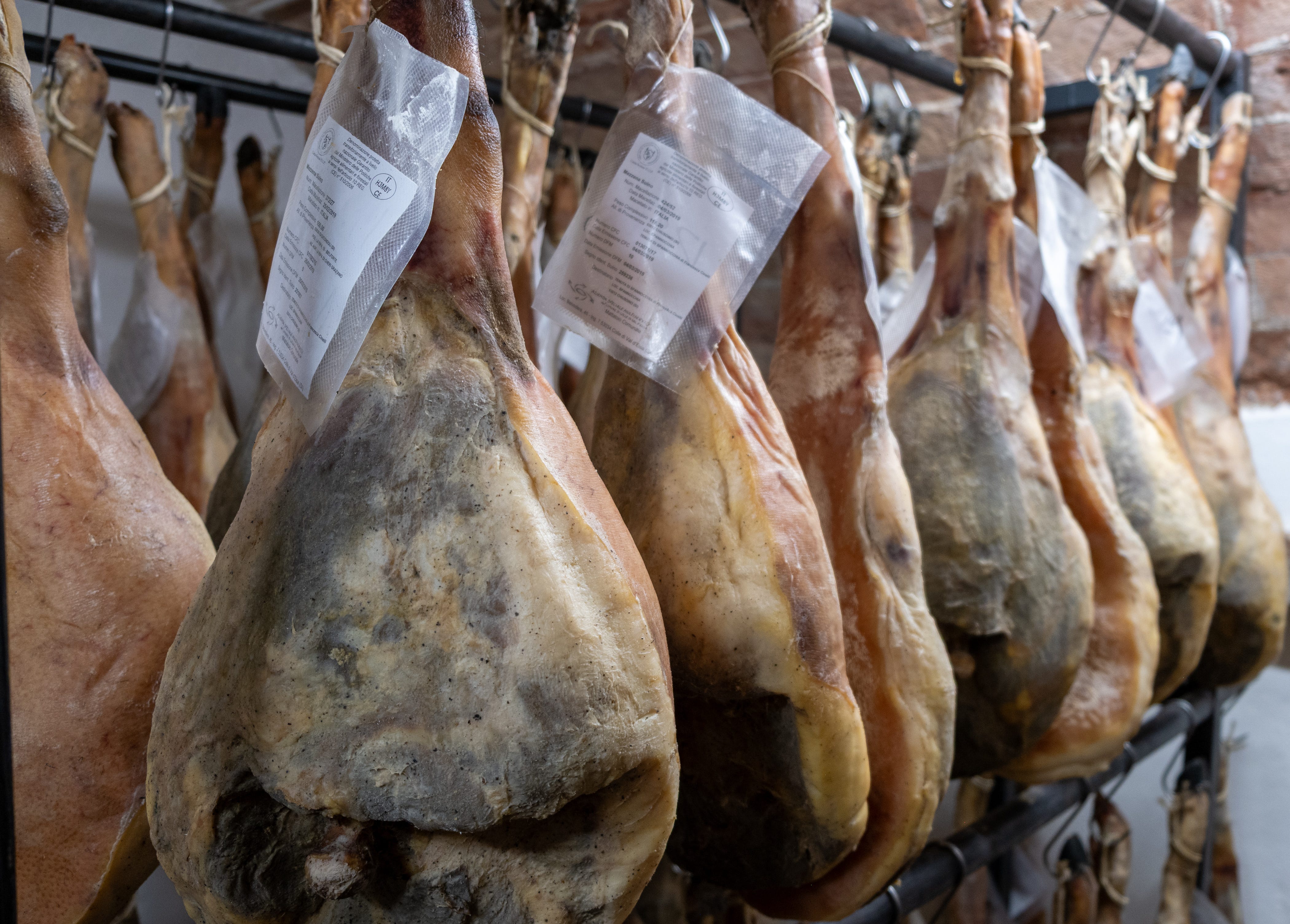
The process starts with the hind leg of a pure-bred animal, harvested whole. One detail the DOP standard insists on: the hoof stays on. It’s a small thing, but it’s also the easiest way to tell, at a glance, that what you’re looking at is the real thing and not a non-DOP imitation.
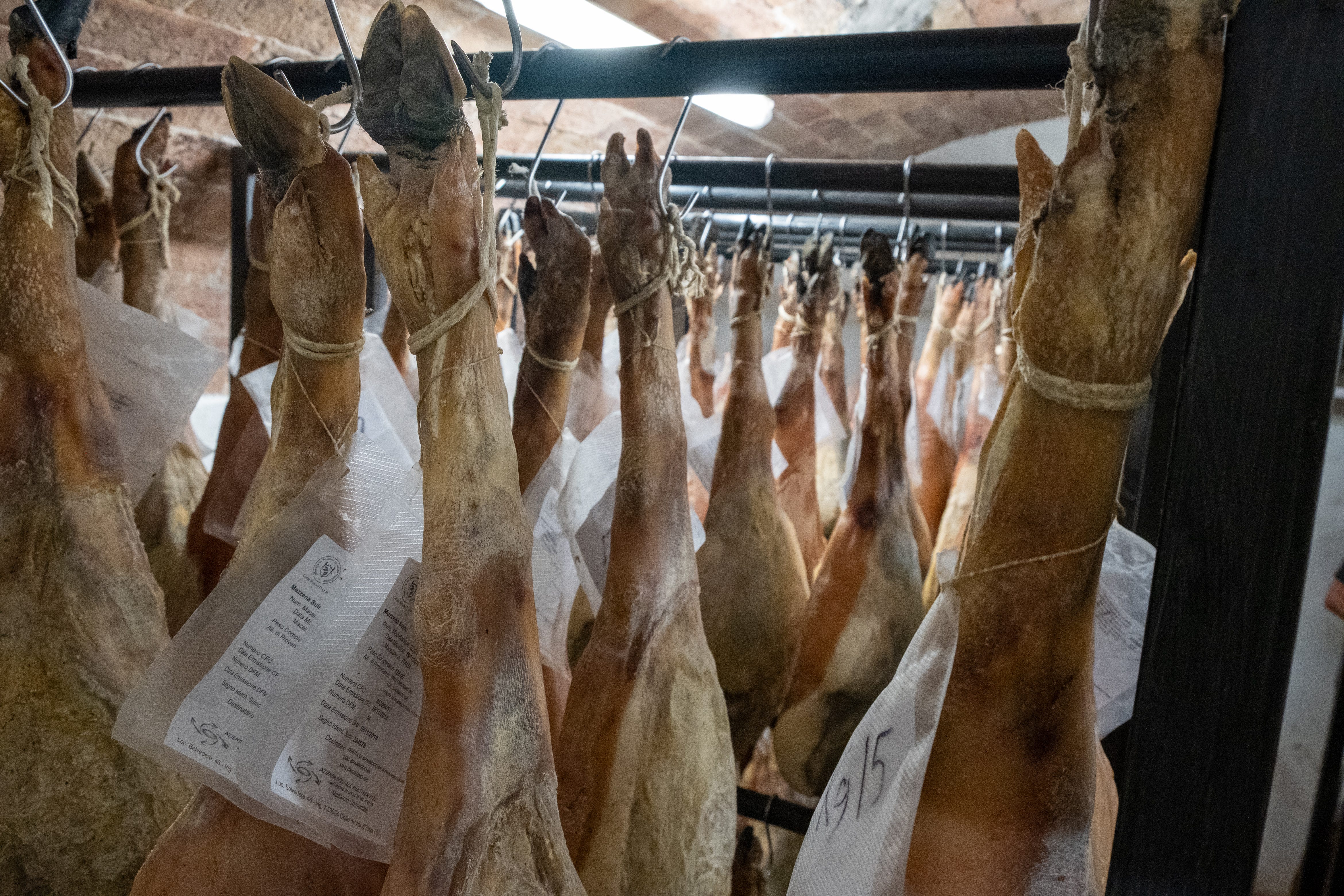
Before any salt touches the meat, butchers manually roll each leg — by hand or with a rolling pin — to press out any blood still sitting in the veins. It’s unglamorous, physical work, and it matters: any blood left behind can spoil the cure before it even starts.
Then comes what’s sometimes called the “aromatic infusion.” The leg is painted or rubbed with a water-based mixture of garlic and sugar, then coated heavily in coarse sea salt and ground black pepper. This isn’t a light seasoning — it’s a thick layer, the first of two.
The Long Salting
The leg spends 5 to 7 days resting in a cold, temperature-controlled room while that first layer of salt pulls out the initial moisture. Then it’s brushed clean, and a second layer of salt goes on for another 5 to 7 days.
After that second rest, the salt is scraped away entirely, and the legs are left standing upright in cold, humid rooms for two to three months. This is where the real penetration happens — salt and garlic working their way in, as the saying goes, straight to the bone. Only after that does the leg get washed in warm water to remove any salt still sitting on the surface, and moved into drying rooms for around six months of carefully controlled temperature and humidity.
By this point, the leg has been resting, salting, and drying for the better part of a year — and the part of the process that actually defines a great prosciutto hasn’t even started yet.
Sugnatura: The Greasing
Once the ham has dried, it goes through a step with a name almost nobody outside Italy has heard of: sugnatura — literally, “greasing.” (It’s also known as stuccatura.) A mixture of lard, rice flour, and black pepper, called sugna, gets worked over the exposed parts of the meat. (I am sure that the mixture of the sugna is the type of secret detail that varies with region and exact composition of which are never shared.) Regardless, the purpose is control: without it, the ham would dry too fast or too unevenly as it continues to age, and the texture would suffer for it. The fat itself is deliberately left uncovered, because that’s where a lot of the flavor is concentrated, and the curers want it exposed to the aging room, not sealed away under grease.
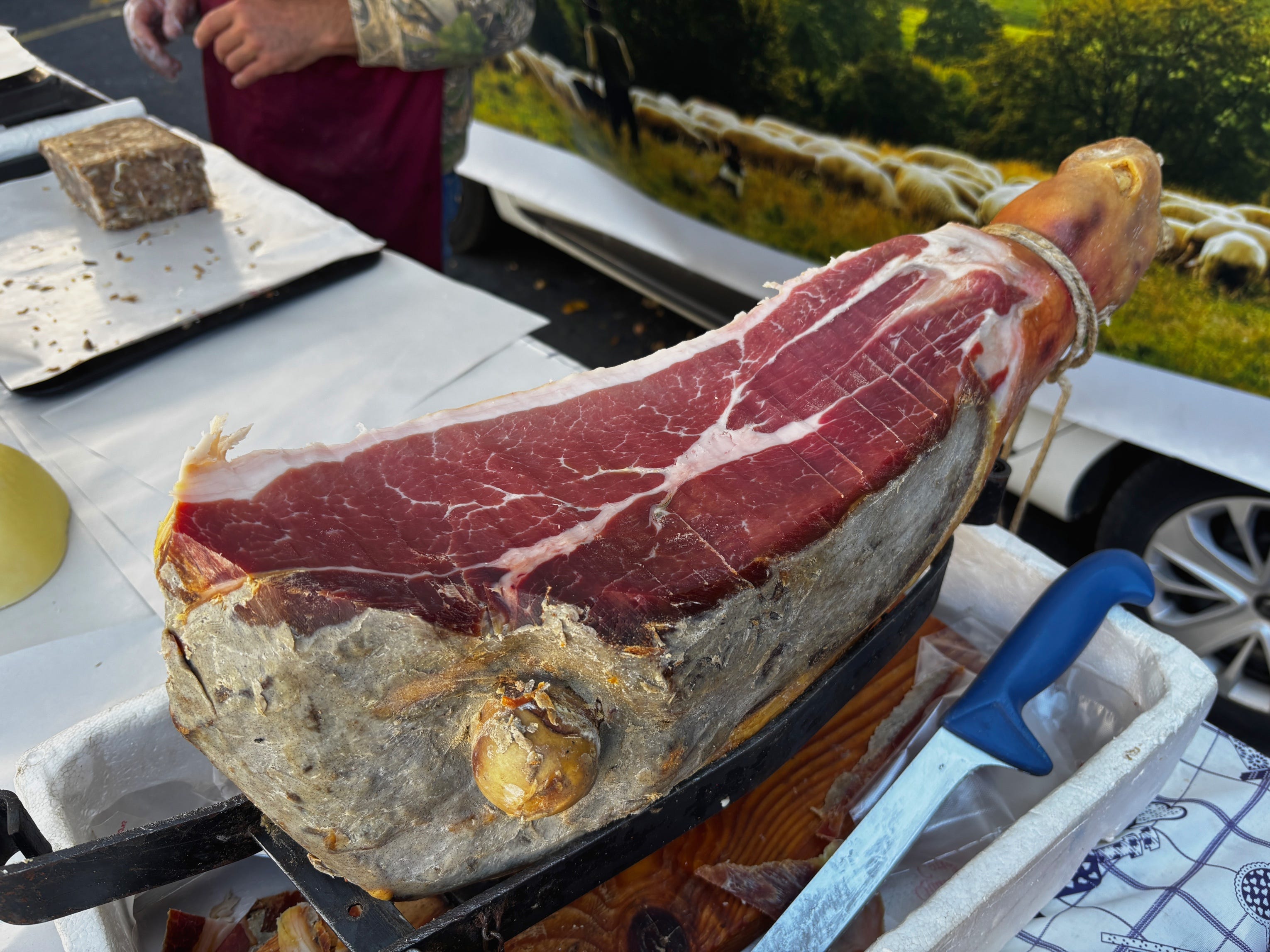
After the sugnatura, the hams move to cool, dark cellars for the remainder of their aging — the long stretch that, combined with everything before it, adds up to 24 months at minimum, sometimes stretching to 36. What comes out the other side is a ham with a deep red color and fat that’s fragrant enough to melt at room temperature — a function, ultimately, of that slow acorn-fed fat finally getting the time it needed.
Worth the Wait
It’s a strange thing to sit with: somewhere in a cellar in Tuscany right now, there’s a leg of Cinta Senese that won’t be ready to eat until sometime in 2028. The whole process — the rolling, the double salting, the sugnatura, the patient dark cellar — only makes sense once you remember what this breed’s pork fat is actually like, and why a standard pig’s timeline would shortchange it.
It’s also a reminder of just how much modern curing has compressed. Most prosciutto on a supermarket shelf never sees anything like this. The Cinta Senese version is slower because it has to be — because that’s what the meat itself is asking for.
Walk in to any decent macelleria in Italy, and you are likely to see the signature prosciutto hanging ceremonially from the ceiling. Depending on where you are, it’s as much a symbol of Italy as a Vespa in Rome, a Venetian gondola, or a trulli in Puglia. You can even book tours across Tuscany and other regions in Northern Italy to see the prosciutto in a cellar.
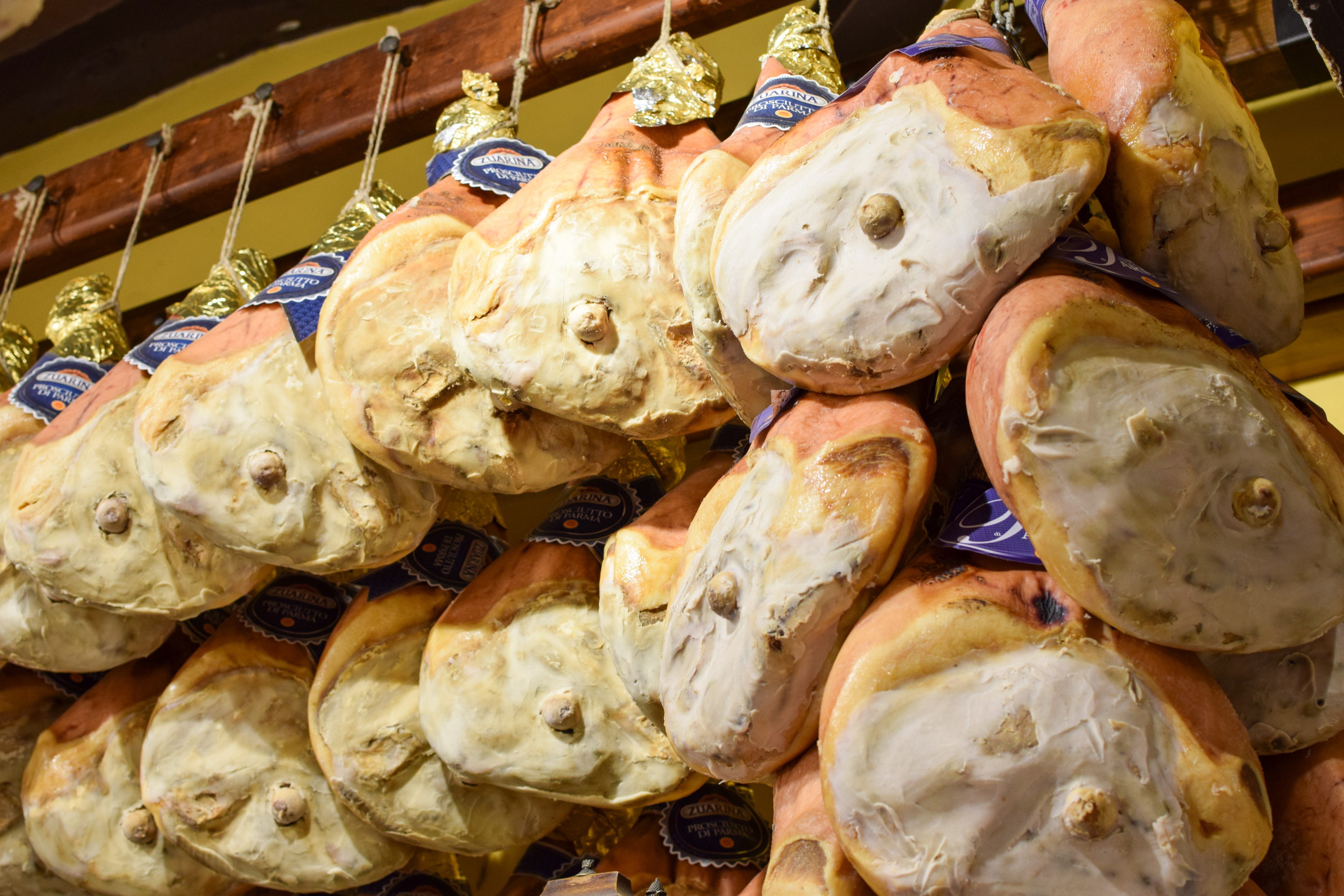
But a trip to a place like Tenuta Spannocchia (as described elsewhere on Farm Table Italy) brings the process up close. There, you can visit the animals in their own habitat and literally see and taste the love and patience that goes into making this treasure. It’s a rare glimpse into a centuries old process that reminds us that food does not just come from a store. Great food comes from a commitment to something larger than just the ingredients: a harmony between people and the land.