

Impostor in the Pantry

There is a bottle of balsamic vinegar in approximately ninety percent of American kitchens. It costs somewhere between six and twelve dollars. It says “Balsamic Vinegar of Modena” on the label, which sounds exactly right. And it bears almost no relationship to the product it is named for and that we focus on in this article.
What I describe is not a minor distinction. It is the difference between a convenience food and one of the oldest, most labor-intensive, most rigorously protected condiments in the history of Italian cooking. Understanding that difference won’t just change how you shop. It will change the way you think about what Italian food is actually capable of.
A Thousand Years in an Attic
The history of true balsamic vinegar begins, as so many Italian food stories do, with the Romans. The practice of cooking down “grape must” — the freshly crushed juice, skins, seeds, and stems of the harvest — dates to ancient times, when the resulting thick syrup was used as both a sweetener and a medicine. The word balsamico comes from the Latin “balsamum”, meaning a balm or restorative, and for centuries that is precisely what it was: a tonic, a cure, a remedy carried by noblemen in small flasks as a matter of routine.
By the 11th century, production had concentrated in two adjacent provinces of what is now Emilia-Romagna: Modena and Reggio Emilia. In 1046, a small barrel of the precious liquid was presented as a diplomatic gift to the Holy Roman Emperor Henry III as he passed through the Po Valley — an early indicator of how highly it was prized. By 1600, the vinegar cellars of the Ducal Palace of Modena were producing what court records would eventually, in 1747, officially name aceto balsamico for the first time. The Dukes of Este reportedly gave small bottles of it as wedding gifts to members of the nobility. A daughter’s dowry in some families of Modena included a batteria — the series of progressively smaller barrels in which the vinegar was aged — as a matter of course.
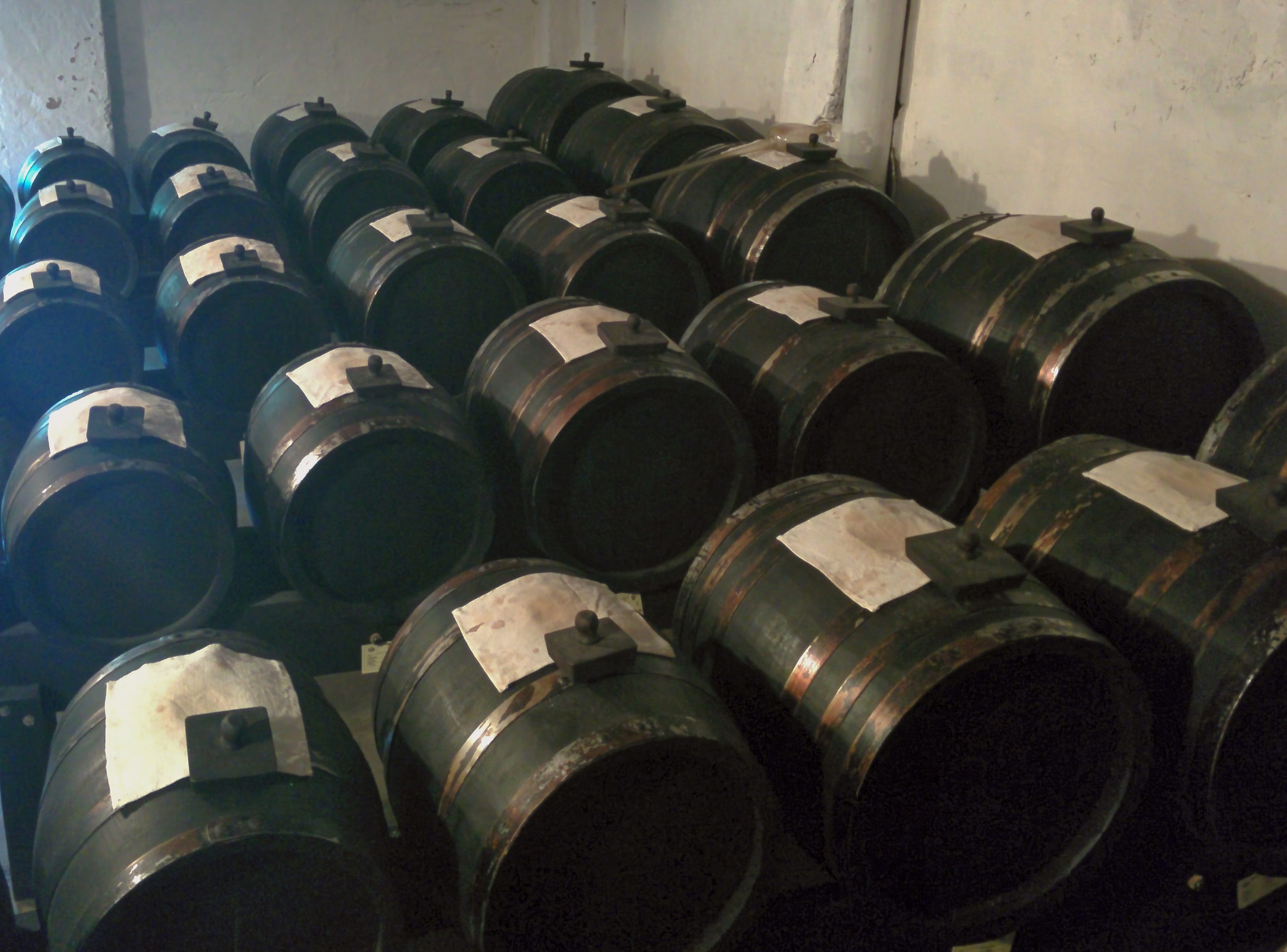
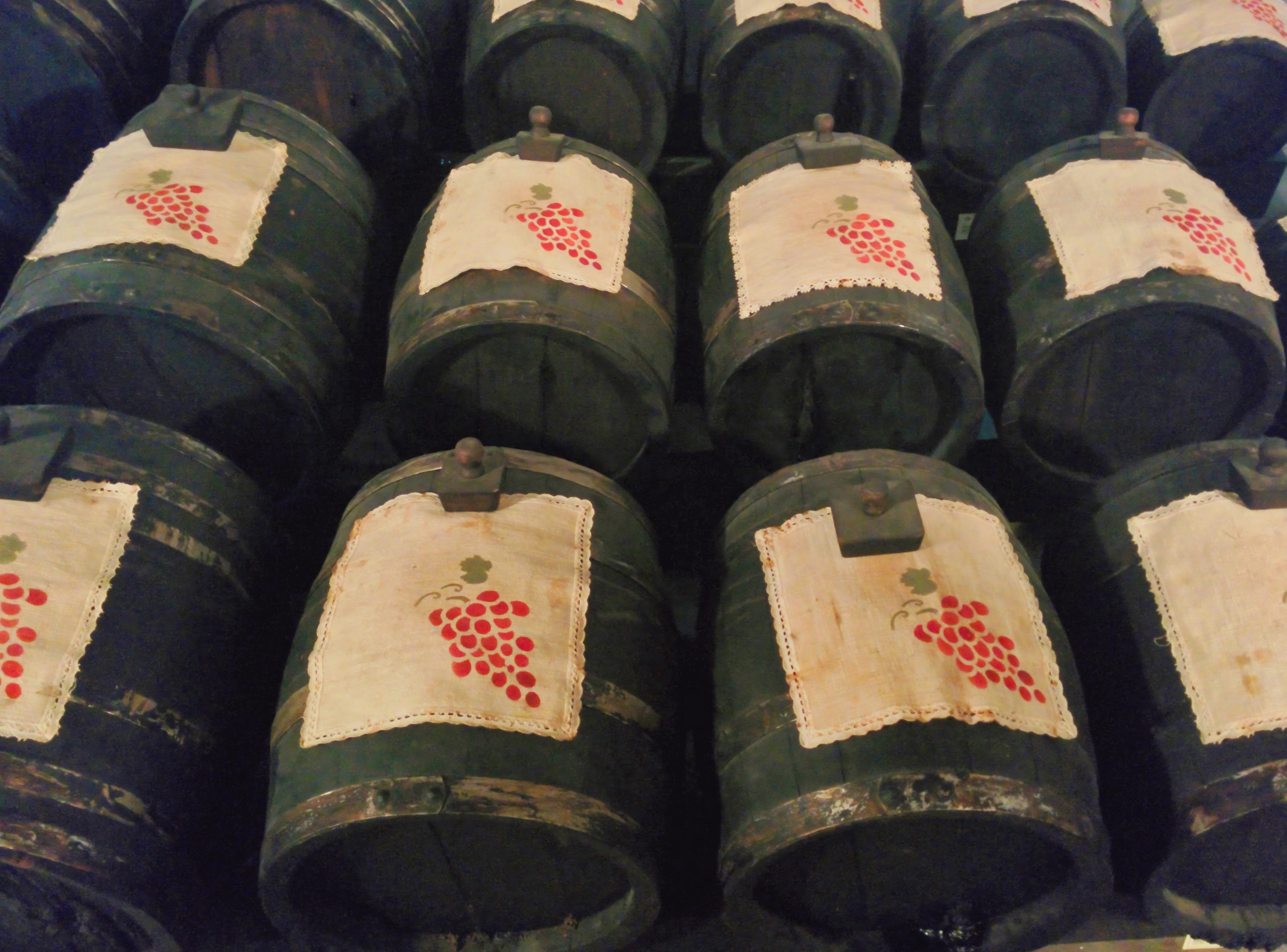
The process that earned it all this reverence hasn’t changed in any fundamental way since. Trebbiano and Lambrusco grapes are harvested, crushed, and their must is slowly cooked over a direct flame until it reduces by roughly half, concentrating the sugars and thickening the liquid into what is called mosto cotto. This cooked must is then poured into the largest of a series of wooden barrels — a batteria — and begins its transformation. Each year, a small amount is drawn from the smallest barrel and bottled; the remaining vinegar is moved progressively down through the series, each barrel replenished from the one above it. The process is not unlike the solera system used in sherry production in Spain, and the result is a blend that contains components from many different years. The barrels are made from different woods — oak, chestnut, cherry, mulberry, juniper — and each imparts something different: oak for structure, cherry for sweetness, juniper for an aromatic sharpness that becomes one of the condiment’s distinctive notes.
This is not a metaphor. By law and by tradition, authentic aceto balsamico tradizionale is aged in the attic spaces of the producers’ homes and farmhouses, where the brutal extremes of the Emilia-Romagna climate — cold, wet winters and hot, airless summers — drive the slow evaporation and concentration that gives the vinegar its character. You cannot make it properly in a climate-controlled facility. You cannot rush it. Start with 100 liters of cooked must and you may end up, after twelve years, with five. The whole process takes a minimum of twelve years. And it lives, from start to finish, in an attic.
Modena vs. Reggio Emilia — and Why it Matters
The two provinces produce their tradizionale under separate consortia with subtle but meaningful differences. Modena’s consortium bottles its product in a distinctive squat, rectangular 100ml bottle designed by the Italian automotive designer Giorgetto Giugiaro — the same man who designed the original Volkswagen Golf and the DeLorean. Reggio Emilia uses an inverted tulip-shaped bottle and a color-coded cap system: red (Aragosta) for a minimum of 12 years, silver (Argento) for 18 years, and gold (Oro) for 25 years or more. Both require rigorous tasting panel approval before anything leaves the acetaia.
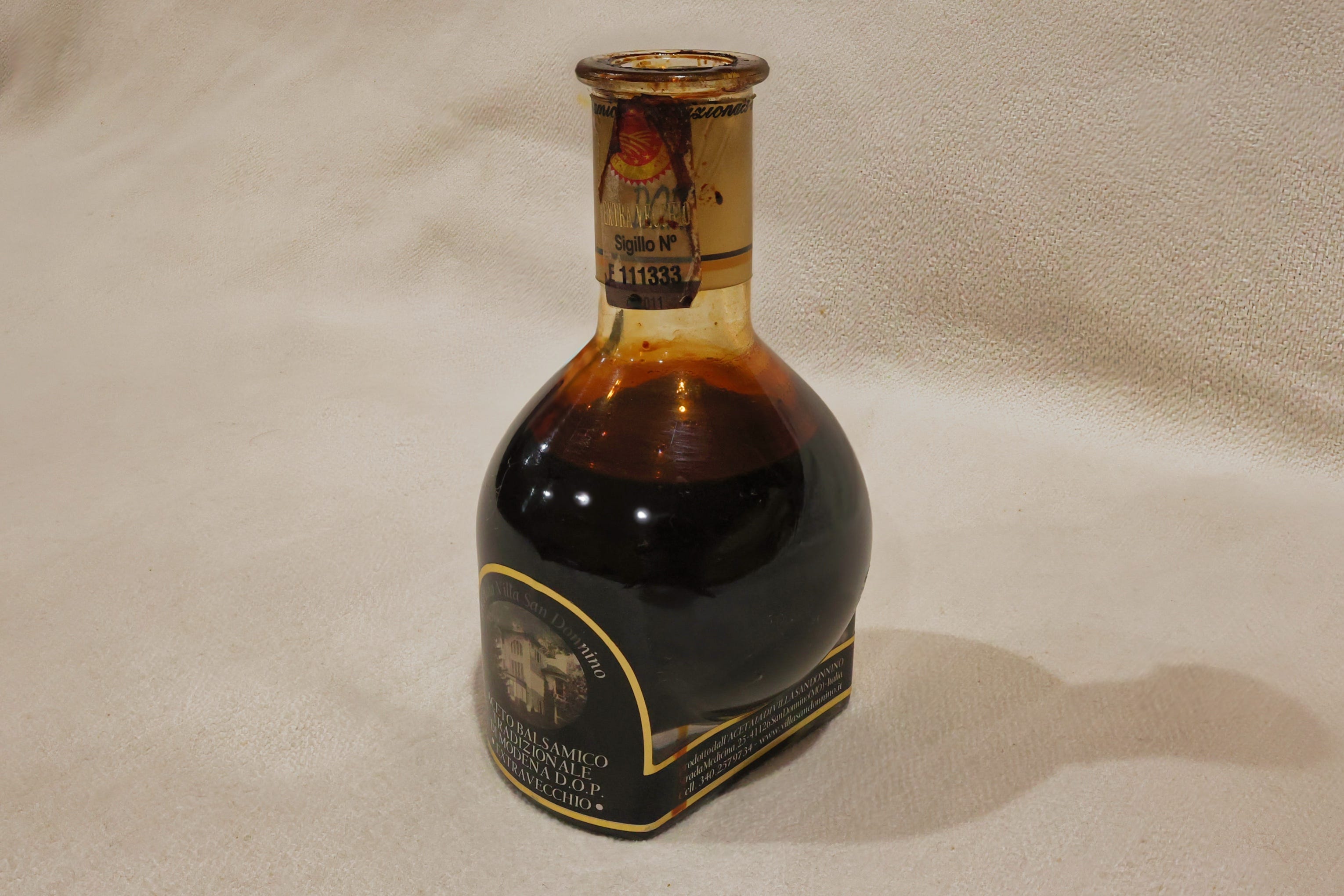
The two versions from the different regions taste different. Reggio Emilia’s tends toward a slightly more rustic, earthy complexity; Modena’s is perhaps more refined in its sweet-sour balance. Neither is superior. They are simply distinct expressions of the same ancient tradition from neighboring provinces that have been, productively, arguing about it for centuries.
The Impostor Problem
Here is where the story gets complicated — and more than a little maddening.
European Union labeling law protects “Aceto Balsamico Tradizionale di Modena DOP” and “Aceto Balsamico Tradizionale di Reggio Emilia DOP” as designated origin products. But it also permits the name “Aceto Balsamico di Modena” — without the word Tradizionale — to be applied to an industrial product that has no meaningful connection to what you just read above. This industrial version is a mixture of wine vinegar, concentrated grape must, caramel coloring, and sometimes preservatives, aged for as little as 60 days. It costs a few dollars. It is produced by the millions of liters. And it sits on the same grocery store shelf, with a name that sounds nearly identical to one of Italy’s most protected food products.
Umberto Sidoli, whose family has been producing balsamic at Agriturismo Cavazzone in the hills outside Reggio Emilia for generations, is direct about this. Some of the barrels in Cavazzone’s ancient hayloft contain vinegar that is more than 100 years old. His father keeps, for his private use, a barrel that is 250 years old. When Sidoli travels to present his product in the United States and visits gourmet food stores, he finds only a handful of sources for the genuine article anywhere in the country.
His test for authenticity is simple: shake the bottle. Real tradizionale is so viscous from years of evaporation and concentration that it coats the sides of the glass. Industrial balsamic, however dark its color, runs thin and fast.
Read the ingredient list. If it contains anything other than cooked grape must, it is not tradizionale.
How to Actually Use It
Authentic aceto balsamico tradizionale is not a cooking ingredient. You do not reduce it into a sauce. You do not toss it with olive oil for a salad dressing. You add a few drops — perhaps four or five, from a small spoon — to finish a dish just before it reaches the table.
The classic pairings are precise and deeply Italian in their logic: a chunk of aged Parmigiano Reggiano, a thin slice of prosciutto, a piece of grilled fish, a fresh strawberry. The 12-year version pairs well with roasted meats. The 25-year gold-label version is reserved for Parmigiano, fruit, and, memorably, a small spoonful over vanilla gelato — a combination that sounds implausible and arrives at the table tasting like the best thing you’ve eaten all week.
A small 100ml bottle of 12-year tradizionale will cost between $80 and $150 depending on the producer. Used with appropriate restraint — a few drops at a time — it will last for months. It does not require refrigeration, it does not spoil, and it improves in the bottle over time. There is no expiration date that means anything; the European Union requires one by regulation, which is the kind of thing that makes Italian food producers reach for a glass of Lambrusco.
Places to Find It in Italy
If Emilia-Romagna is on your itinerary, Cavazzone — a working agriturismo and restaurant about 15 kilometers outside Reggio Emilia in the hills near the village of Regnano — offers guided tours of their acetaia, tastings, and cooking classes built around balsamic vinegar. The restaurant, housed in what was once the estate’s stable with cast iron pillars supporting a vaulted ceiling, serves the full canon of Reggio Emilia cuisine: tortelli, tagliatelle, erbazzone, cured meats, Parmigiano, and Lambrusco — all accompanied by the Sidoli family’s own balsamico. Tours are by appointment; ask for Umberto.
If you can’t make it to Reggio Emilia, the Museum of Traditional Balsamic Vinegar in Spilamberto, just outside Modena, is an excellent alternative — and it sits conveniently in the same neighborhood as Modena’s other culinary attractions, which deserve an article of their own entirely.
I visited a special facility called an acetaia where the process of slow fermentation occurs. Located near Modena, Acetaia Villa San Donnino provides visitors with an excellent view into the process and history of nurturing and developing balsamico. It turns out that it’s a bit of a tradition for Italians to reserve a new bottle of balsamico to mark the birth of a new child. The fermentation processes begin … and time slowly performs its magic. Often, the final product is then delivered at the babies’ future marriage or graduation or other significant date far-in-the-future. Talk about a gift that gets better with time.